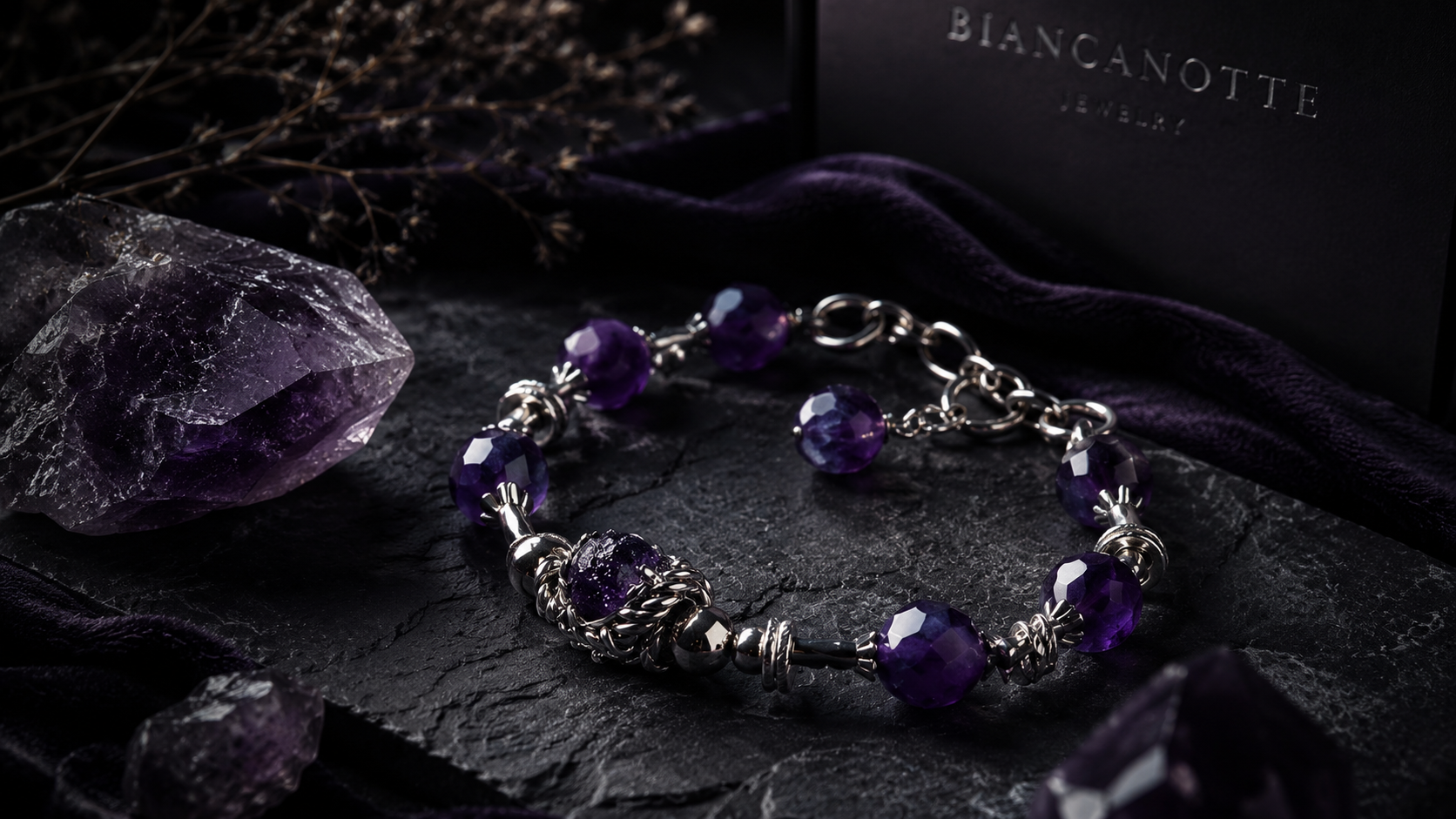
What Is Amethyst?
Amethyst is a purple variety of quartz, formed naturally within the Earth's crust over millions of years.
Its color can range from delicate lavender tones to deep royal purple, making every stone unique.
Because of its durability and striking appearance, amethyst has been used in jewelry, decorative objects, and ceremonial pieces for thousands of years.
The Historical Meaning of Amethyst
Throughout history, different cultures have attributed various meanings to amethyst.
In ancient Greece, amethyst was associated with clarity of mind and self-control.
During the Middle Ages, it became a symbol of wisdom, sincerity, and spiritual reflection.
Royal families and religious leaders often incorporated amethyst into crowns, rings, and ceremonial jewelry due to its rarity and prestigious appearance.
While interpretations have evolved over time, amethyst has consistently been connected with qualities of balance, insight, and inner strength.
What Does Amethyst Symbolize Today?
In modern jewelry, amethyst is often associated with:
Clarity
Many people appreciate amethyst as a symbol of mental focus and clear thinking.
Balance
Its calming purple tones have made it a popular representation of emotional harmony and stability.
Wisdom
Across many traditions, amethyst has long been linked to thoughtful decision-making and personal growth.
Creativity
Artists, writers, and creative individuals are often drawn to its inspiring color and distinctive character.
These symbolic meanings are personal interpretations rather than universal truths, which is why many people simply choose amethyst because they feel naturally connected to its beauty.
Why Is Amethyst So Popular in Jewelry?
Amethyst remains one of the most beloved gemstones for several reasons.
Timeless Beauty
Its purple color feels both elegant and distinctive, allowing it to complement a wide range of styles.
Versatility
Amethyst pairs beautifully with sterling silver, gold, black metals, and other gemstones.
Natural Uniqueness
No two amethysts are exactly alike. Variations in color, inclusions, and patterns make every stone unique.
Meaningful Design
Many people enjoy wearing jewelry that carries personal significance, and amethyst's rich history contributes to its enduring appeal.
How to Choose an Amethyst Bracelet
When selecting an amethyst bracelet, consider:
The shade of purple you prefer
The bracelet size that best fits your wrist
Whether you favor minimalist or statement designs
The materials used alongside the gemstone
Natural variations in color and texture are normal and contribute to the individuality of each piece.
Natural Beauty in Every Stone
Because amethyst is a natural gemstone, slight differences in appearance should be expected.
Small inclusions, subtle color variations, and unique patterns are all part of the stone's natural character.
Rather than imperfections, these features serve as reminders of the gemstone's geological journey and authenticity.
Final Thoughts
Amethyst has remained admired for centuries because it combines natural beauty with rich cultural significance.
Whether you are drawn to its elegant purple color, its historical symbolism, or simply its timeless appearance, amethyst continues to be a gemstone that resonates with people across generations.
At BIANCANOTTE, we celebrate the individuality of natural gemstones through handcrafted jewelry designed to highlight their unique beauty and character.